
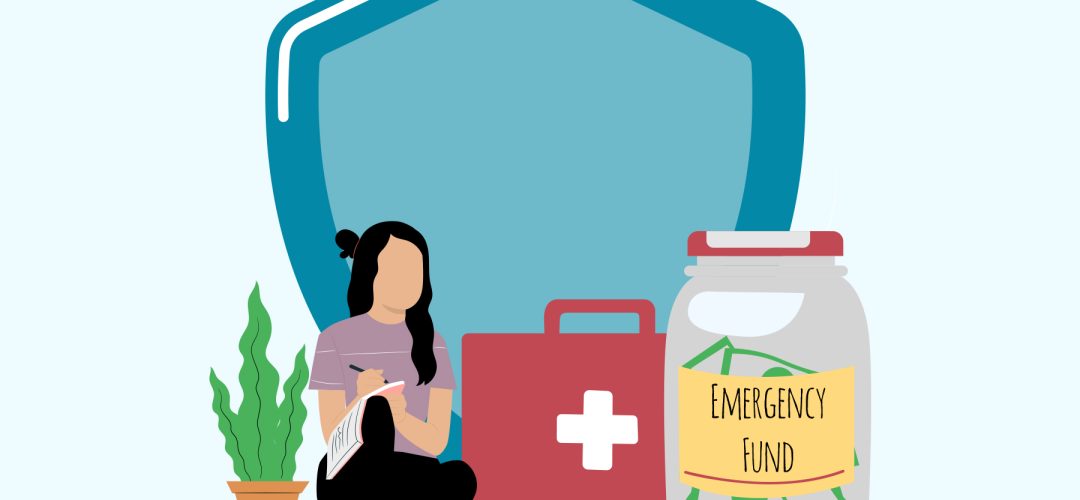
Financial experts often talk about “peace of mind,” but what does that actually look like? It looks like a car engine failure that doesn’t ruin your month. It looks like a medical bill that doesn’t end up on a high-interest credit card. It looks like losing a job and knowing you have months to find the right next step rather than taking the first thing that comes along.
This “peace of mind” is physically manifested in an Emergency Fund.
An emergency fund is a dedicated savings account used to cover large, unexpected expenses. It is the foundation of any healthy financial plan. Without it, you are perpetually one bad break away from debt. This guide will walk you through the “why,” the “how much,” and the “where” of building your financial fortress.
Phase 1: Understanding the “Why” and the “How Much”
Before you save a single dollar, you need a target. A vague goal of “saving more money” rarely succeeds. You need a specific number.
How Much Do You Really Need?
The standard advice is to save 3 to 6 months of essential living expenses. Notice the keyword: essential. This isn’t your current salary; it’s what you need to survive.
To calculate your number, add up:
- Housing (Rent/Mortgage)
- Utilities (Electricity, Water, Internet)
- Groceries (The basics, not dining out)
- Insurance premiums
- Minimum debt payments
- Transportation costs
The Starter Goal: If 6 months of expenses feels overwhelming (e.g., $15,000), don’t panic. Aim for a Starter Emergency Fund of $1,000 or one month of expenses. This covers most common “hiccups” like a blown tire or a broken appliance.
Phase 2: Choosing the Right Home for Your Fund
Where you put your money is just as important as how much you save. Your emergency fund needs to balance two things: Liquidity and Growth.
1. High-Yield Savings Accounts (HYSA)
This is the gold standard for emergency funds. Unlike a traditional brick-and-mortar savings account that offers 0.01% interest, an HYSA offers significantly higher rates. Your money stays liquid (you can withdraw it anytime) but grows enough to help combat inflation.
2. Money Market Accounts (MMA)
Similar to savings accounts, these often come with check-writing abilities or a debit card, making them slightly more accessible in a pinch.
3. What to Avoid
- The Stock Market: Never put your emergency fund in stocks. If the market crashes 20% the same week you lose your job, your safety net has a giant hole in it.
- Physical Cash: Keeping thousands under a mattress is a theft and fire risk, and it earns zero interest.
- CDs (Certificates of Deposit): These lock your money away for set terms. If you pull money out early for an emergency, you’ll pay a penalty.
Phase 3: The Step-by-Step Action Plan
Now that you have a target and a location, it’s time to execute. Use this five-step process to build your fund from scratch.
Step 1: Audit Your Spending
You cannot save what you don’t track. Use a budgeting app or a simple spreadsheet to categorize your spending over the last 30 days. Identify “leaks”—subscriptions you don’t use, excessive takeout, or impulsive online shopping.
Step 2: Pay Yourself First (The Automation Secret)
The biggest mistake people make is trying to “save what’s left at the end of the month.” Usually, nothing is left.
Set up an automatic transfer from your checking account to your emergency fund on the day you get paid. If the money is gone before you see it, you won’t miss it.
Step 3: Slash and Burn (The Sprint Phase)
If you want to build your fund quickly, consider a temporary “spending freeze.” For 30 to 60 days, cut all non-essential spending. Redirect every saved dollar into your fund. This “sprint” creates momentum and provides an immediate psychological win.
Step 4: Utilize Windfalls
Tax refunds, work bonuses, or monetary gifts are “found money.” While it’s tempting to treat yourself, redirecting at least 50-70% of windfalls into your emergency fund can shave months off your timeline.
Step 5: Adjust as Life Changes
Your emergency fund isn’t a “set it and forget it” tool. If you buy a house, have a child, or your rent increases, your “6-month” number needs to be recalculated.
Phase 4: Defining a “True Emergency”
One of the hardest parts of having a large pile of cash is the temptation to touch it. To protect your fund, you must define what constitutes an emergency.
| Is it an Emergency? | Action |
| Job loss or reduced income | YES – Use the fund. |
| Urgent medical procedure | YES – Use the fund. |
| Major car repair (essential for work) | YES – Use the fund. |
| A great deal on a vacation | NO – Save separately. |
| Holiday gift shopping | NO – This is a predictable expense. |
| Newer, faster smartphone | NO – This is a want, not a need. |
Pro Tip: If you do use the fund, your new #1 financial priority becomes replenishing it.
The Psychological Benefit: Moving from Fragile to Resilient
Building an emergency fund is more than just a math exercise; it’s a psychological shift. When you have a cushion, your stress levels drop. You become a better employee because you aren’t working out of desperation. You become a better partner because financial friction is reduced.
The road to a fully-funded emergency account is a marathon, not a sprint. Even if you can only save $20 a week, the habit of consistency is more valuable than the amount itself. Start today, stay disciplined, and watch as your financial anxiety transforms into financial confidence.
How I Can Help Next
Would you like me to create a customized monthly budget template based on your current income and expenses to help you find that first $1,000?