In an era of economic shifts and unpredictable global events, the concept of financial security has moved from being a luxury to a necessity. Whether it’s an unexpected medical bill, a sudden car repair, or a period of unemployment, life has a way of throwing “curveballs” that don’t fit into a monthly budget.
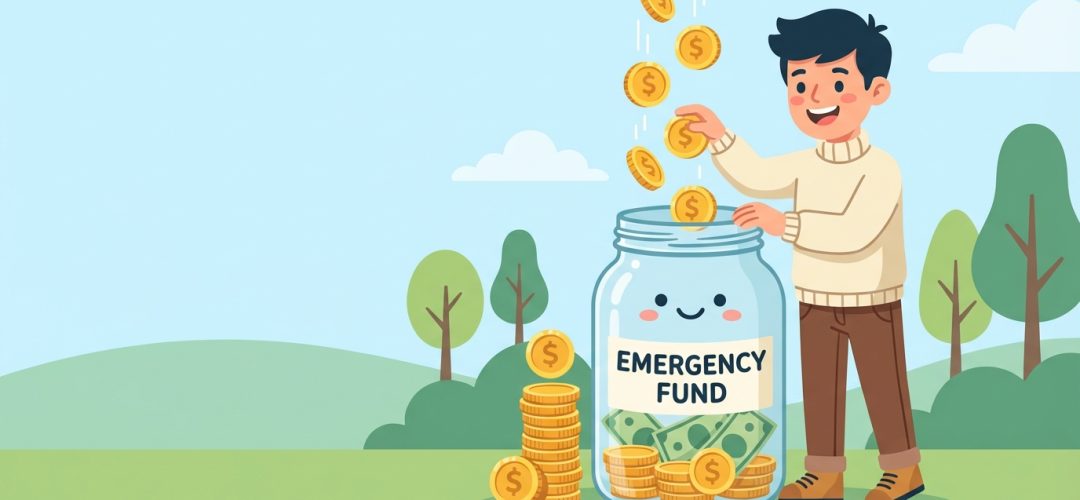
This is where an Emergency Fund comes in. It is not just a savings account; it is your financial “fire extinguisher.” In this guide, we will explore why you need one, how much you should save, and the smart strategies to build yours from the ground up.
1. Defining the Emergency Fund
An emergency fund is a stash of liquid cash set aside specifically for large, unplanned expenses or financial emergencies. Crucially, this fund is separate from your long-term investments (like stocks or real estate) and your “fun money” (vacations or gadgets).
Why Liquidity Matters
In a crisis, you need cash fast. While investing in the stock market is great for wealth building, selling assets during a market downturn to cover a bill is a recipe for financial loss. An emergency fund provides liquidity, ensuring you have access to funds without debt or penalties.
2. How Much is Enough? The Gold Standard
The most common question is: “How much should I save?” While the answer depends on your lifestyle, financial experts generally suggest a tiered approach.
| Situation | Recommended Goal |
| Single & Stable Job | 3 Months of Expenses |
| Family with Children | 6 Months of Expenses |
| Self-Employed / Freelancer | 9-12 Months of Expenses |
| High-Risk Industry | 12 Months of Expenses |
Note: Base these numbers on your essential expenses (rent, utilities, food, insurance) rather than your total current income.
3. Step-by-Step Strategies for Building Your Fund
A. Start with a “Starter” Fund
If you are starting from zero, the idea of saving six months of expenses can feel overwhelming. Don’t look at the mountain; look at the first step. Aim for a Starter Emergency Fund of $1,000 to $2,000. This small cushion is enough to cover most minor repairs or medical deductibles, preventing you from reaching for a high-interest credit card.
B. Automate Your Success
The biggest enemy of saving is human psychology. If we see money in our checking account, we tend to spend it.
- Direct Deposit: Set up your payroll to automatically send a portion of your paycheck (even if it’s just 5%) directly into a separate savings account.
- “Set it and Forget it”: If you don’t have to manually move the money, you won’t “forget” to do it.
C. The “Windfall” Rule
Whenever you receive money that isn’t part of your regular paycheck—tax refunds, work bonuses, or cash gifts—apply the 50/50 Rule. Put 50% toward your emergency fund and use the other 50% for whatever you like. This accelerates your savings without making you feel deprived.
D. Audit Your Recurring Costs
Small leaks can sink a big ship. Conduct a “subscription audit” once every quarter. Canceling a $15 streaming service you rarely use adds $180 a year to your fund. When combined with other “micro-savings,” you can often find an extra $50–$100 a month.
4. Where to Park Your Cash
Your emergency fund needs to be accessible, but not too accessible. You want it out of sight so you aren’t tempted to spend it on a weekend trip.
- High-Yield Savings Accounts (HYSA): These are the gold standard for emergency funds. They offer significantly higher interest rates than traditional checking accounts while remaining FDIC-insured and liquid.
- Money Market Accounts (MMA): Similar to HYSAs, these often come with a debit card or check-writing abilities, which can be useful in a pinch.
- No-Penalty CDs: These allow you to lock in a higher interest rate with the flexibility to withdraw the principal if an emergency arises.
5. Avoiding Common Pitfalls
Building a fund is a marathon, not a sprint. To stay on track, avoid these three common mistakes:
- Treating it like a “Slush Fund”: A sale on a new TV is not an emergency. A “want” is not a “need.” Define clearly what constitutes an emergency before you start saving.
- Saving While Carrying High-Interest Debt: If you have credit card debt at 20% APR, it’s often smarter to build a $1,000 starter fund and then pivot to aggressive debt repayment.
- Investing Your Emergency Fund: Never put your core emergency cash into volatile assets like crypto or individual stocks. The risk of the market being down exactly when you need the money is too high.
6. The Psychological Benefit: Financial Peace
Beyond the numbers, an emergency fund provides psychological dividends. When you have a six-month cushion, the “fear” of a boss’s bad mood or a weird noise in your car engine diminishes. You aren’t just saving money; you are buying the ability to sleep better at night.
As the old proverb goes: “The best time to plant a tree was 20 years ago. The second best time is now.” The same applies to your financial safety net. Start small, stay consistent, and watch your resilience grow.
Calculating Your Target
To find your specific target, you can use the following formula for monthly expenses ($E$) and desired months of coverage ($M$):
For example, if your essential bills are $3,000 per month and you want a 6-month cushion:
$$3,000 \times 6 = 18,000$$
Next Steps
Would you like me to create a personalized monthly budget template to help you identify how much you can realistically contribute to your emergency fund starting this month?