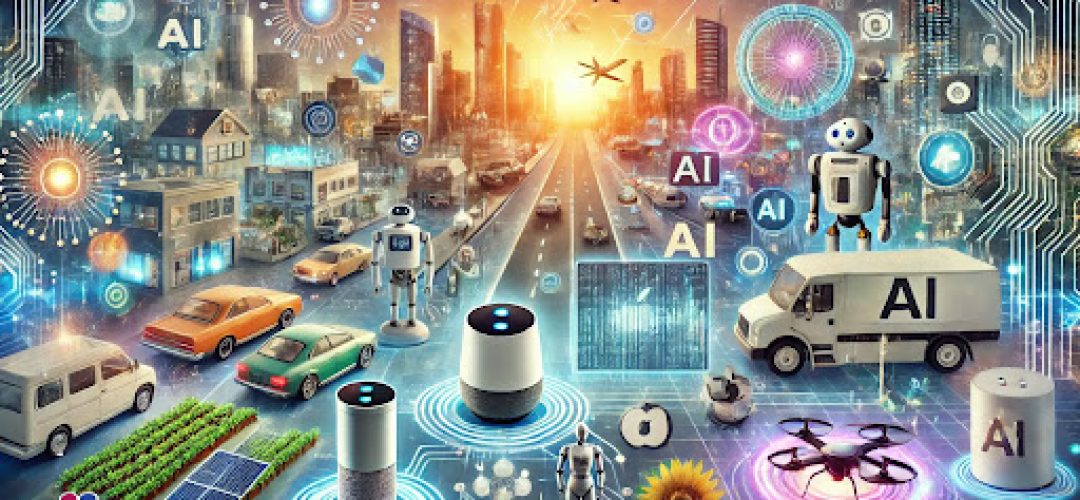
The concept of Artificial Intelligence (AI) has transitioned from the pages of science fiction novels to the palm of our hands in record time. While “AI” once conjured images of sentient robots and galactic empires, the reality of the 21st century is much more subtle and, in many ways, more profound. Today, AI is the invisible engine driving our digital world, and its trajectory suggests a future where the distinction between “human task” and “algorithmic assistance” becomes nearly indistinguishable.
As we look toward the next decade, the integration of AI into everyday life will move beyond reactive tools and toward proactive, ambient intelligence.
1. The Proactive Personal Assistant
Current AI assistants like Siri, Alexa, or Google Assistant are primarily reactive; they wait for a command to play music or set a timer. The future of AI lies in predictive assistance.
Imagine a system that doesn’t just tell you there’s traffic, but analyzes your calendar, notices a pattern of you being tired on Thursday mornings, and automatically suggests a remote start for your meeting or orders a coffee to be ready the moment you walk into the cafe. This “Hyper-Personalization” will be fueled by Large Language Models (LLMs) and personal data processing that respects privacy through edge computing—where the AI lives on your device rather than a central server.
2. Revolutionizing Healthcare at Home
Perhaps the most impactful shift will be in the realm of personal wellness. We are moving from a model of “sick care” to “preventative care,” powered by AI.
- Wearable Diagnostics: Future wearables will go beyond counting steps. They will monitor blood glucose levels non-invasively, track cortisol (stress) levels, and use AI to detect cardiac irregularities weeks before they become symptomatic.
- AI Nutritionists: By analyzing your metabolic data and historical energy levels, AI can generate real-time meal plans tailored to your specific biology, even communicating directly with smart ovens to ensure food is cooked to preserve maximum nutrient density.
3. The New Era of Work and Productivity
The “future of work” is often discussed with a hint of anxiety regarding job displacement. However, the more likely scenario is Augmented Intelligence.
AI will act as a “Co-Pilot” for every profession. For creators and managers, AI will handle the “drudge work”—transcribing meetings, organizing spreadsheets, and drafting initial reports—allowing humans to focus on strategy, empathy, and high-level creativity. In professional settings, AI-driven content management systems will ensure that information is not just stored, but synthesized and made available exactly when a project requires it.
4. Smart Cities and Sustainable Living
On a macro level, AI will become the steward of our environments. As urban populations grow, “Smart Cities” will rely on AI to manage resources efficiently.
- Traffic Management: AI algorithms will synchronize traffic lights in real-time based on actual flow, drastically reducing carbon emissions from idling vehicles.
- Energy Optimization: AI-driven smart grids will predict energy surges and balance the load using renewable sources, making “Green Tech” a standard part of home utility management rather than a luxury.
5. Education and Lifelong Learning
The traditional “one-size-fits-all” education system is ripe for AI disruption. AI tutors can provide a personalized curriculum for every student, identifying exactly where a learner is struggling and adapting the teaching style accordingly. If a student understands physics better through visual simulations than text, the AI will restructure the lesson in real-time to prioritize 3D models and interactive experiments.
6. Navigating the Ethical Landscape
With great integration comes great responsibility. The future of AI in everyday life hinges on three critical pillars: Privacy, Transparency, and Security.
Cybersecurity and Fraud Prevention
As AI becomes more integrated into our finances, the threats become more sophisticated. However, AI is also our best defense. Future security systems will use “Behavioral Biometrics”—analyzing the unique way you type, swipe, or move—to verify identity, making traditional password theft a thing of the past. Protecting digital assets will be a silent, ongoing process managed by personal AI guardians.
The “Human” Element
The ultimate challenge of an AI-saturated world is maintaining human connection. As algorithms curate our feeds and schedule our lives, there is a risk of falling into “echo chambers.” The future of AI must include “diversity by design,” where algorithms are programmed to introduce us to new ideas, different cultures, and unexpected experiences, rather than just reinforcing what we already know.
7. Financial Literacy and Market Access
AI is democratizing the world of finance. Previously, sophisticated market analysis and portfolio management were reserved for institutional investors. In the near future, AI-driven platforms will allow everyday users to manage their wealth with the same level of insight. From analyzing the long-term stability of ETFs to evaluating the ESG (Environmental, Social, and Governance) impact of their investments, AI will provide the tools for ethical and effective wealth building.
Conclusion: An Evolution, Not a Takeover
The future of Artificial Intelligence in everyday life is not about robots replacing humans; it is about technology becoming an intuitive extension of human intent. It is the silent helper that optimizes our energy, the guardian that protects our digital identity, and the tutor that unlocks our potential.
By embracing AI with a focus on sustainability, ethical transparency, and human-centric design, we are not just preparing for a high-tech future—we are building a more efficient, personalized, and insightful way of living. The transition will be subtle, appearing not as a sudden shift, but as a series of small conveniences that, over time, fundamentally enhance the quality of human life.
Key Takeaways for the Future:
- Personalization: AI will move from “Search” to “Search and Solve.”
- Wellness: A shift toward proactive, AI-monitored health.
- Sustainability: AI will be the primary tool for managing green energy and reducing waste.
- Security: Transitioning toward AI-based identity protection and fraud detection.