
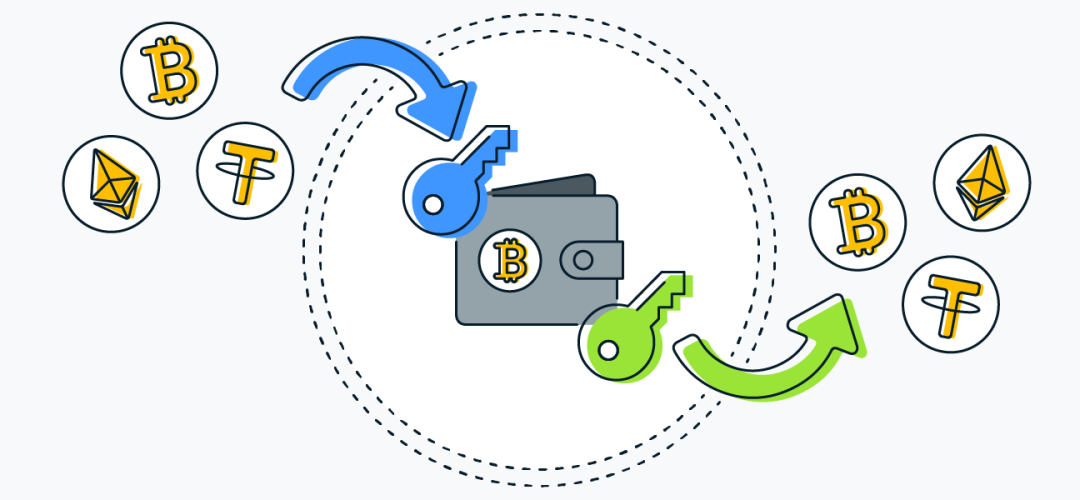
In recent years, cryptocurrencies have evolved from an obscure technological experiment into a revolutionary asset class that is reshaping global finance. Millions of people around the world use, trade, and invest in digital currencies every day. However, despite their growing popularity, the underlying concepts behind cryptocurrency remain complex and confusing for many.
Understanding what cryptocurrencies are and how they operate is essential for anyone looking to navigate the modern financial ecosystem. This guide breaks down the core concepts of cryptocurrencies, the technology that powers them, how transactions occur, and the risks and opportunities they present.
What Is a Cryptocurrency?
A cryptocurrency is a digital or virtual currency secured by cryptography, making it nearly impossible to counterfeit or double-spend. Unlike traditional government-issued currencies (known as fiat money—such as the US Dollar, Euro, or Brazilian Real), most cryptocurrencies operate on decentralized networks based on blockchain technology.
The defining characteristic of a cryptocurrency is that it is typically not issued by any central authority, such as a central bank or government. Instead, it relies on a distributed network of computers (nodes) to validate transactions and maintain the integrity of the system.
Key Characteristics of Cryptocurrencies
- Decentralization: No single entity controls the network; authority is distributed among its participants.
- Digital Nature: Cryptocurrencies exist only in electronic form; there are no physical coins or paper bills issued by a central bank.
- Cryptographic Security: Advanced mathematical algorithms secure transactions and prevent unauthorized tampering.
- Global Accessibility: Anyone with an internet connection can send, receive, and hold cryptocurrency anywhere in the world.
- Transparency and Immutability: Transactions are recorded on a public ledger, making them permanent and transparent to all users.
The Engine Behind Crypto: Blockchain Technology
To understand how cryptocurrencies work, you must first understand the technology behind them: the blockchain.
A blockchain is a decentralized, distributed database or ledger shared across a network of computers. Information is stored in “blocks,” and each block contains a set of transaction records. Once a block is filled with data, it is cryptographically linked—or “chained”—to the previous block, creating an unalterable chronological sequence.
+------------------+     +------------------+     +------------------+
|     Block 101    |     |     Block 102    |     |     Block 103    |
|------------------|     |------------------|     |------------------|
| Data: Tx 1, Tx 2 | --> | Data: Tx 3, Tx 4 | --> | Data: Tx 5, Tx 6 |
| Hash: 0x8a9f...  |     | Hash: 0x3b1c...  |     | Hash: 0x7d2e...  |
| Prev: 0x0000...  |     | Prev: 0x8a9f...  |     | Prev: 0x3b1c...  |
+------------------+     +------------------+     +------------------+
How a Blockchain Maintains Trust
In traditional finance, banks act as trusted intermediaries to ensure that Person A has enough money to send to Person B and that no money is spent twice. In a cryptocurrency network, blockchain technology replaces the bank with a consensus mechanism.
- Transaction Request: A user initiates a transaction sending funds to another address.
- Broadcast: The transaction is broadcast to a peer-to-peer network of independent computers (nodes).
- Verification: Nodes validate the transaction details (such as wallet balance and digital signature) using predefined rules.
- Block Formation: Validated transactions are bundled together into a new block.
- Consensus: The network agrees that the block is legitimate through a consensus protocol.
- Chain Addition: The new block is permanently added to the blockchain, and the update is shared across the entire network.
How Transactions Work: Wallets and Keys
When you own cryptocurrency, you do not physically possess a digital coin stored on your hard drive. Instead, you own a private key that gives you access to a specific address on the blockchain.
Cryptocurrency transactions rely on Public Key Cryptography, which involves two linked keys:
| Key Type | Analogy | Function |
|---|---|---|
| Public Key | Bank Account Number | A public address you share with others so they can send you funds. |
| Private Key | Digital Signature / Password | A secret code that allows you to sign transactions and spend your funds. |
The Role of Crypto Wallets
A crypto wallet is a software application or physical hardware device that stores your public and private keys and interacts with the blockchain. Wallets come in two main categories:
- Hot Wallets (Online): Connected to the internet (e.g., mobile apps, web browser extensions). They offer convenience for daily transactions but carry higher exposure to online security risks.
- Cold Wallets (Offline): Hardware devices (resembling USB drives) or paper backups disconnected from the internet. They offer maximum security for long-term storage.
How Consensus Mechanisms Work
Since there is no central server to verify transactions, cryptocurrency networks rely on consensus mechanisms to ensure all nodes agree on the state of the ledger. The two most prominent mechanisms are Proof of Work and Proof of Stake.
Consensus Mechanisms
 ├── Proof of Work (PoW)  --> Uses computational power to solve complex math puzzles (e.g., Bitcoin)
 └── Proof of Stake (PoS) --> Uses staked coins as collateral to validate transactions (e.g., Ethereum)
1. Proof of Work (PoW)
Proof of Work was pioneered by Bitcoin. In a PoW system, specialized computers called miners compete against each other to solve complex mathematical puzzles. The first miner to solve the puzzle earns the right to add the next block to the blockchain and receives a reward in newly created cryptocurrency plus transaction fees.
- Pros: Highly secure, battle-tested, and resistant to attack.
- Cons: High energy consumption and requirement for expensive hardware.
2. Proof of Stake (PoS)
Proof of Stake is an eco-friendly alternative where network participants (“validators”) lock up or stake a certain amount of cryptocurrency as collateral. The network algorithm selects validators based on the amount staked and other factors to propose and validate new blocks.
- Pros: Energy-efficient, faster transaction processing, lower hardware requirements.
- Cons: Risk of centralization if a small group holds a vast majority of the staked supply.
Overview of Major Cryptocurrencies
While thousands of cryptocurrencies exist today, they generally fall into distinct categories based on their primary function:
- Bitcoin (BTC): Launched in 2009 by the pseudonymous creator Satoshi Nakamoto, Bitcoin was the first cryptocurrency. It is designed primarily as a peer-to-peer electronic cash system and a digital store of value (“digital gold”).
- Ethereum (ETH): Created in 2015 by Vitalik Buterin, Ethereum introduced smart contracts—self-executing code that automatically runs when predetermined conditions are met. This enabled the growth of Decentralized Finance (DeFi), Non-Fungible Tokens (NFTs), and decentralized applications (dApps).
- Altcoins: Any cryptocurrency other than Bitcoin is broadly referred to as an “altcoin” (alternative coin). Examples include Solana, Cardano, and Ripple (XRP), each aiming to optimize transaction speed, scalability, or specialized use cases.
- Stablecoins: Cryptocurrencies tied to the value of an external asset, such as the US Dollar (e.g., USDT, USDC). They combine the speed and transparency of blockchain with price stability.
Benefits and Advantages of Cryptocurrencies
- Financial Inclusion: Allows billions of unbanked individuals globally to access financial services using just a smartphone.
- 24/7 Operations: Unlike traditional stock markets or banks, cryptocurrency networks operate continuously without weekends or holiday shutdowns.
- Lower Cross-Border Fees: Sending money internationally via crypto can be faster and significantly cheaper than traditional wire transfers or remittance services.
- User Autonomy: Self-custody wallets give individuals direct control over their assets without relying on traditional banks.
Risks and Challenges to Consider
While cryptocurrencies offer immense potential, they also carry significant risks that users and investors must understand:
- Price Volatility: Crypto markets are known for extreme price fluctuations, making them speculative and high-risk investments.
- Security Vulnerabilities: Lost private keys or seed phrases cannot be recovered by customer support. In addition, malicious phishing scams and exchange hacks remain risks.
- Regulatory Uncertainty: Governments worldwide are still developing legal frameworks surrounding taxation, consumer protection, and compliance for digital assets.
- Irreversibility: Blockchain transactions cannot be canceled or reversed once confirmed on the network.
The Future of Cryptocurrencies
Cryptocurrency and blockchain technology continue to mature rapidly. Major global financial institutions are incorporating digital assets into their portfolios, central banks are exploring Central Bank Digital Currencies (CBDCs), and layer-2 scaling solutions are making transactions faster and cheaper than ever before.
Whether viewed as a revolutionary form of money, a technological framework for digital ownership, or an alternative investment class, cryptocurrencies represent a profound shift in how humanity exchanges value in the digital age. As the ecosystem evolves, education and risk management remain the most critical tools for anyone looking to participate.