Artificial Intelligence (AI) is no longer a futuristic concept confined to research labs and science fiction. In 2026, it is the primary engine of a major global industrial transformation. By shifting from simple task automation to complex, interconnected, and autonomous decision-making systems, AI is redefining how businesses operate, protect their assets, and scale.
This article explores how AI innovations are reshaping key global sectors—specifically focusing on finance, cybersecurity, and manufacturing—while examining the broader strategic implications for modern organizations.
1. Financial Ecosystems: Predictive Intelligence and Risk Mitigation
The global financial sector has transitioned from reactive historical analysis to real-time predictive modeling. Today, financial institutions rely on advanced machine learning algorithms to manage risk, optimize investment strategies, and automate compliance.
High-Frequency Predictive Analytics
Traditional forecasting models often struggle with the sheer volume and velocity of modern market data. Modern neural networks can analyze millions of data points—ranging from macroeconomic indicators to real-time sentiment analysis on social media and news feeds—to identify micro-trends before they manifest in the broader market. This allows asset managers to adjust portfolios dynamically, minimizing exposure to sudden market downturns.
Transforming Corporate Governance
AI has introduced a new level of precision to corporate governance. Natural Language Processing (NLP) tools can instantly parse complex regulatory filings, international tax updates, and legal contracts. By cross-referencing internal financial practices with global compliance standards, AI minimizes human error, prevents costly regulatory penalties, and ensures absolute transparency.
2. Cyber Defense: Adaptive Threat Hunting and Zero-Trust Automation
As digital infrastructure becomes more complex, corporate vulnerabilities increase. Traditional, signature-based security tools—which look for known malware patterns—are no longer sufficient to stop modern, sophisticated cyber attacks. AI has stepped in as the ultimate shield, driving a shift toward proactive, self-healing cyber defense systems.
Autonomous Threat Detection
Instead of waiting for an alert, security systems now use AI to establish a baseline of “normal” behavior for every device and user account within a network.
How it works: If an employee account suddenly accesses sensitive financial databases at 3:00 AM from an unusual IP address, the AI detects the anomaly instantly. It can automatically isolate the affected device and revoke access permissions in milliseconds, preventing potential data exfiltration before a human analyst can even open the alert.
This speed is crucial for defending against ransomware and zero-day exploits (previously unknown security vulnerabilities). By automating containment, companies drastically reduce their average time to detect and respond to threats.
3. Industrial Manufacturing: Predictive Maintenance and Smarter Supply Chains
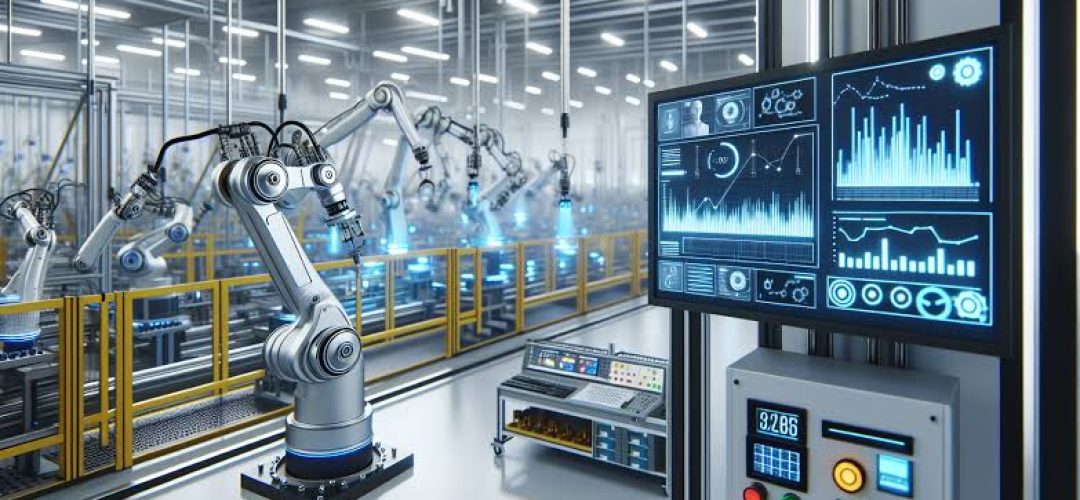
In physical industries, downtime equals lost revenue. AI is bridging the gap between digital intelligence and heavy machinery, driving unprecedented efficiency on the factory floor and across global supply chains.
Predictive Maintenance (PdM)
Rather than performing maintenance on a fixed schedule—which can be both premature and costly—manufacturers use IoT (Internet of Things) sensors connected to AI systems. These sensors monitor real-time variables like temperature, vibration, and acoustic signatures.
By analyzing this data, the AI can predict exactly when a robotic arm or turbine is likely to fail. This allows companies to schedule repairs during planned downtime, avoiding catastrophic, unexpected equipment failures and saving millions in lost productivity.
Smart Logistics and Demand Forecasting
Global supply chains are notoriously sensitive to external disruptions. AI algorithms optimize logistics by analyzing weather patterns, shipping lane congestion, and geopolitical events. Furthermore, predictive demand systems help companies adjust their inventory levels in real time, preventing both overproduction and stockouts.
Comparing AI’s Impact Across Sectors
The table below summarizes how these core innovations translate to tangible benefits across different global industries:
| Sector | Core AI Innovation | Primary Business Benefit | Key Operational Focus |
| Finance | Machine Learning & NLP | Risk reduction, automated compliance, and smarter portfolio optimization | Algorithmic trading and real-time regulatory compliance |
| Cybersecurity | Behavioral Anomaly Detection | Instant threat isolation and proactive zero-day defense | Protecting sensitive corporate data and digital assets |
| Manufacturing | Predictive Maintenance & IoT | Minimizing unplanned downtime and optimizing product lifecycles | Industrial automation and supply chain resilience |
The Strategic Path Forward
Implementing AI successfully requires a balanced approach. Organizations must prioritize three key areas to ensure sustainable, long-term success:
- Data Integrity: AI models are only as good as the data used to train them. Companies must invest in clean, structured, and secure data pipelines.
- Ethical Governance: Implementing AI requires clear guidelines surrounding user privacy, algorithmic bias, and decision transparency.
- Workforce Reskilling: Rather than replacing human workers, the most effective AI strategies focus on “human-in-the-loop” systems, where AI automates tedious data processing, freeing professionals to focus on creative problem-solving and strategic decision-making.
By focusing on these principles, global businesses can navigate the complexities of digital transformation and secure a strong, resilient position in the modern economy.