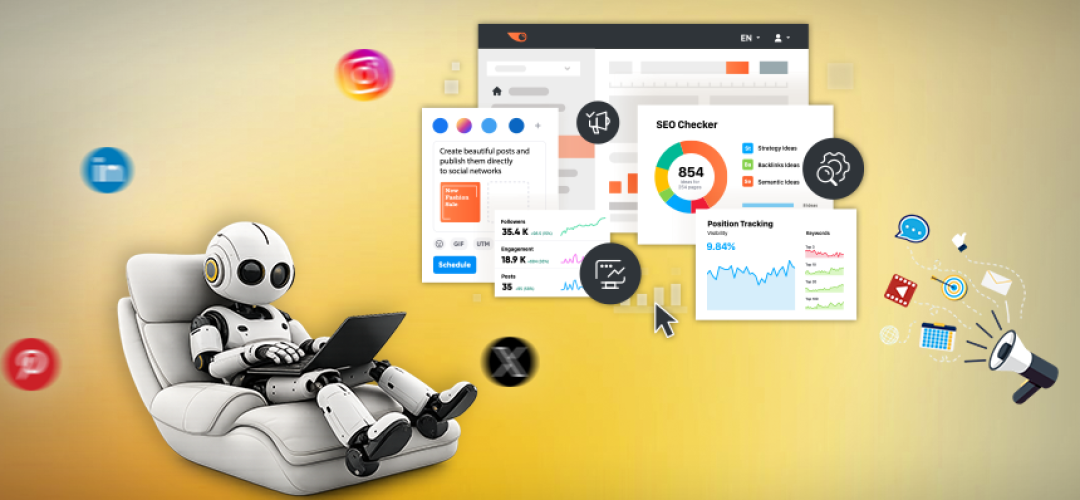
The digital marketing landscape is undergoing its most significant evolution since the advent of the search engine. Artificial Intelligence (AI) is no longer a futuristic concept or a speculative tool used only by enterprise-level corporations. Today, AI-driven applications are deeply embedded in everyday marketing workflows, fundamentally altering how brands communicate, analyze data, and scale their operations.
For digital marketers, business owners, and content creators, understanding this shift is critical. The market has moved past basic automation—like scheduling posts or sending triggered emails—into the era of intelligent augmentation. AI tools are now acting as co-pilots, analyzing massive datasets in real time, predicting consumer behavior, and generating highly personalized content at an unprecedented scale.
This article explores the core AI tools driving this transformation across content creation, search engine optimization (SEO), data analytics, and hyper-personalized customer experiences, while highlighting how to integrate them ethically and effectively.
1. Content Generation and Copywriting Evolution
Content remains the cornerstone of digital marketing, but the demand for high-volume, multi-channel production has heavily strained creative teams. Generative AI tools have stepped into this gap, not to replace human writers, but to eliminate the friction of the “blank page.”
Advanced Language Models
Tools built on foundational large language models (LLMs)—such as OpenAI’s ChatGPT, Anthropic’s Claude, and Google’s Gemini—have evolved beyond simple text generation. Marketers use these platforms to:
- Brainstorm high-performing angles for ad campaigns.
- Draft multi-variant email subject lines for A/B testing.
- Repurpose a single long-form blog post into dozens of social media snippets adapted for LinkedIn, X (formerly Twitter), and Instagram.
Specialized Marketing Copywriters
Platforms like Jasper AI and Copy.ai build on top of these models by offering framework-specific templates (such as AIDA: Attention, Interest, Desire, Action) and brand-voice memory features. This ensures that generated copy remains aligned with a company’s specific tone, style guide, and compliance rules across thousands of assets.
The AdSense Compliance Note: To maintain high-value monetization status, marketers must avoid publishing raw, unedited AI content. Search engines and ad networks prioritize E-E-A-T (Experience, Expertise, Authoritativeness, and Trustworthiness). The winning strategy is using AI for the first draft, followed by human editors adding real-world experience, original data, and unique insights.
2. SEO and Content Intelligence Platforms
Search engine optimization has transformed from a game of manual keyword stuffing into a sophisticated science of user intent and semantic relevance. AI tools have become essential for decoding complex search engine algorithms and mapping out competitive landscapes.
Content Optimization and Auditing
Tools like Surfer SEO, Frase, and MarketMuse analyze existing top-ranking pages for any given keyword. They use Natural Language Processing (NLP) to tell marketers exactly which subtopics, questions, and related terms must be covered to satisfy a user’s search intent. This removes the guesswork from content briefs, drastically increasing the efficiency of organic search strategies.
Predictive SEO and Rank Tracking
Enterprise platforms such as Semrush and BrightEdge leverage machine learning algorithms to identify emerging search trends before they hit peak volume. By analyzing historical data and structural shifts in search results, these tools allow brands to create content proactively, capturing market share before competitors even notice the shift.
3. Visual and Multimedia Production
The rise of visual-first platforms like TikTok, Instagram Reels, and YouTube Shorts has made video and graphic production non-negotiable. Traditionally, multimedia creation required massive budgets and specialized technical skills. AI has democratized this space.
AI-Driven Video Editing and Creation
Platforms like Runway, Pika, and HeyGen are redefining video workflows. Marketers can now generate realistic avatars for training or promotional videos, translate localized content into multiple languages with perfect lip-syncing, or edit video simply by editing a text transcript via tools like Descript.
Scalable Graphic Design
Aside from text-to-image giants like Midjourney, platforms like Canva have integrated deep AI suites (Magic Studio) that allow marketing teams to instantly resize assets for different platforms, remove backgrounds with a click, and generate variations of ad creatives optimized for specific demographic segments.
4. Hyper-Personalization and Predictive Analytics
Generic, broad-blast marketing campaigns are seeing diminishing returns. Modern consumers expect interactions tailored precisely to their immediate needs, behaviors, and preferences.
Predictive Customer Data Platforms (CDPs)
Tools like Albert AI and Lytics analyze user behavior across websites, mobile apps, and email interactions. By identifying subtle patterns that human analysts might miss, these systems predict which customers are at risk of churning, which are ready to make a purchase, and what specific product recommendation will maximize the average order value (AOV).
Programmatic Ad Optimization
In paid advertising, platforms like Smartly.io and Google’s own Performance Max (P-Max) use machine learning to automate creative testing and bidding across massive ad networks. These systems automatically adjust budgets in real time, shifting capital to the specific creative variations, audiences, and placements delivering the lowest Cost Per Acquisition (CPA).
5. Conversational AI and Customer Experience
The modern consumer demands 24/7 responsiveness. Traditional rule-based chatbots often frustrated users with rigid, cyclical answers. Current conversational AI has completely shifted this dynamic.
Intelligent Virtual Assistants
Powered by advanced NLP, platforms like ManyChat, Intercom (Fin AI), and Ada handle complex customer inquiries with nuance. They pull information directly from internal knowledge bases, resolve tracking issues, troubleshoot product concerns, and qualify inbound leads before routing them to human agents. This ensures immediate satisfaction while lowering support overhead significantly.
Summary of Key AI Marketing Tools
| Marketing Category | Prominent AI Tools | Primary Strategic Value |
|---|---|---|
| Content & Copywriting | ChatGPT, Claude, Jasper, Copy.ai | Rapid ideation, asset scaling, and brand voice alignment. |
| SEO & Research | Surfer SEO, Semrush, MarketMuse | Semantic search optimization and predictive keyword analysis. |
| Video & Graphics | Descript, HeyGen, Midjourney, Canva | Low-cost multimedia production and automated localization. |
| Paid Media & Analytics | Performance Max, Smartly.io, Albert | Real-time budget allocation and hyper-targeted ad variations. |
| Customer Experience | Intercom (Fin), Ada, ManyChat | 24/7 intelligent automated support and lead qualification. |
Conclusion: The Path Forward for Marketers
AI tools are not a replacement for human ingenuity, strategic vision, or emotional intelligence. The most successful modern digital marketing campaigns are those driven by a hybrid model: AI efficiency combined with human empathy.
By leveraging these platforms to handle heavy data processing, initial content drafting, and automated optimization, marketing professionals free up the cognitive space required for high-level strategy, deep storytelling, and building genuine psychological connections with their target audience. Embracing these tools today ensures relevancy in an increasingly automated tomorrow.