
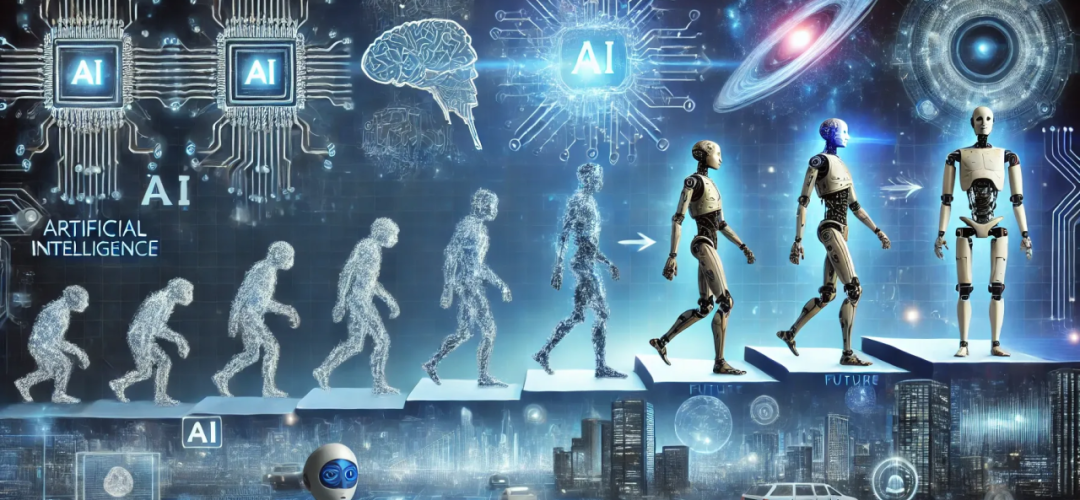
For decades, robotics and artificial intelligence (AI) developed on parallel but separate tracks. Industrial robotics dominated the late 20th century, relying on precise, repetitive, but fundamentally “dumb” programming. These machines could weld a car chassis or move a pallet with millimeter accuracy, but if the target object was shifted by an inch, the system failed.
The convergence of advanced AI—specifically deep learning, computer vision, and large language models (LLMs)—with mechanical engineering has triggered a paradigm shift. Robotics is evolving from pre-programmed automation to dynamic cognitive autonomy. This article explores how AI is reshaping the architecture, capabilities, and future trajectory of robotics.
1. The Shift from Automation to Autonomy
To understand the impact of AI on robotics, one must distinguish between automation and autonomy.
- Automation refers to a machine executing a predefined set of instructions without deviation.
- Autonomy implies the ability of a machine to sense its environment, make independent decisions, and adapt to unpredictable changes in real time.
AI acts as the brain that transforms rigid automated hardware into an autonomous entity. Instead of writing millions of lines of conditional code (e.g., “if X, do Y”), roboticists now use machine learning models. Through these models, robots process massive amounts of sensory data to learn how to interact with the physical world, much like a human child does.
2. Key AI Technologies Driving Robotic Evolution
The modern intelligent robot is a synthesis of several breakthroughs in artificial intelligence:
Computer Vision and Spatial AI
Traditional robots used simple infrared sensors or lasers to detect obstacles. Today, AI-powered computer vision utilizes Convolutional Neural Networks (CNNs) and LiDAR data to build real-time 3D semantic maps of the environment. This allows robots to not only see an object but also identify what it is (e.g., distinguishing between a fragile glass bowl and a sturdy cardboard box) and predict how it will behave.
Reinforcement Learning (RL)
In Reinforcement Learning, an AI agent learns to achieve a goal within an uncertain, complex environment by trial and error. In robotics, this is heavily utilized in physics simulators before deployment (Sim-to-Real transfer). A robotic arm might attempt to grasp an oddly shaped object millions of times in a virtual environment, refining its technique based on a reward system, before executing the task flawlessly in the physical world.
Generative AI and Natural Language Control
The integration of Large Language Models (LLMs) has revolutionized human-robot interaction. Instead of requiring complex programming syntax, robots can now understand abstract, contextual human commands. For instance, telling a robot to “clean up the spilled coffee” requires the machine to infer that it needs to find a paper towel, locate the spill, wipe it, and dispose of the trash—a feat made possible by grounding language models in physical environments.
3. The Rise of Embodied AI and Humanoid Robots
One of the most significant frontiers in this evolution is Embodied AI—the concept that intelligence requires a physical body to interact with the world. This has fueled a massive resurgence in the development of humanoid robots.
Historically, humanoid form factors were deemed impractical due to the extreme complexity of balancing and bipedal locomotion. However, advanced neural networks can now manage real-time balance adjustments across complex terrain.
| Attribute | Traditional Industrial Robots | Modern AI-Driven Humanoids |
| Environment | Caged, structured, predictable | Open, unstructured, human-centric |
| Task Flexibility | Single-purpose (e.g., painting, welding) | General-purpose (e.g., lifting, sorting, operating tools) |
| Learning Method | Manual trajectory programming | Imitation learning & Reinforcement learning |
| Safety | Hazardous to humans nearby | Collaborative (Cobots) with built-in proximity awareness |
Companies are betting heavily on humanoids because our entire global infrastructure—from factory floors and stairs to doorways and tools—is designed for the human body. A truly adaptable humanoid robot can theoretically step into any human job without requiring companies to redesign their facilities.
4. Transformative Industry Applications
The intersection of AI and robotics is actively disrupting major global sectors:
Logistics and Warehousing
While automated guided vehicles (AGVs) have been around for years, AI-driven Autonomous Mobile Robots (AMRs) navigate dynamic warehouse floors independently. They optimize their own routes, avoid moving forklifts, and use vision-guided robotic arms to pick and pack oddly shaped, unorganized inventory.
Healthcare and Surgery
In medical settings, AI does not replace surgeons but enhances their capabilities. Robotic surgical assistants analyze real-time video feeds to filter out human hand tremors, map subsurface blood vessels, and provide predictive guidance during delicate procedures, drastically reducing recovery times.
Agriculture
Autonomous tractors and drones equipped with computer vision can identify weeds, evaluate soil moisture, and apply pesticides with micro-precision to individual plants. This targeted approach reduces chemical usage by up to 90%, promoting environmental sustainability while increasing crop yields.
5. Challenges, Ethics, and the Road Ahead
Despite rapid acceleration, several technical and ethical bottlenecks remain before widespread deployment is realized.
The Moravec’s Paradox Challenge
Named after scientist Hans Moravec, this paradox notes that while computers can easily perform complex logical reasoning (like beating a grandmaster at chess), giving a machine the motor skills of a one-year-old child (like walking across a messy room or catching a ball) is incredibly difficult. Fine motor control and physical adaptability remain computationally expensive tasks.
Safety, Reliability, and Edge Cases
In a digital environment, an AI hallucination or error results in a glitch on a screen. In robotics, an error can result in physical destruction or human injury. Ensuring that deep neural networks behave predictably in unprecedented “edge cases”—scenarios the AI has never encountered before—is a critical area of ongoing research.
Economic and Workforce Displacement
As general-purpose robots become economically viable, concerns regarding labor displacement will intensify. The transition will require a societal shift toward retraining workers to supervise, maintain, and collaborate with robotic systems rather than competing against them.
Conclusion
The evolution of robotics through Artificial Intelligence marks a transition from machines that merely do to machines that think, learn, and adapt. We are moving away from isolated, single-use mechanical tools and entering an era of collaborative, intelligent physical partners.
As hardware components become lighter and cheaper, and AI models grow more computationally efficient, the presence of smart robots will expand far beyond factory walls into our hospitals, fields, and homes. Navigating the technical hurdles and ethical responsibilities of this shift will define the next chapter of human technological progress.