
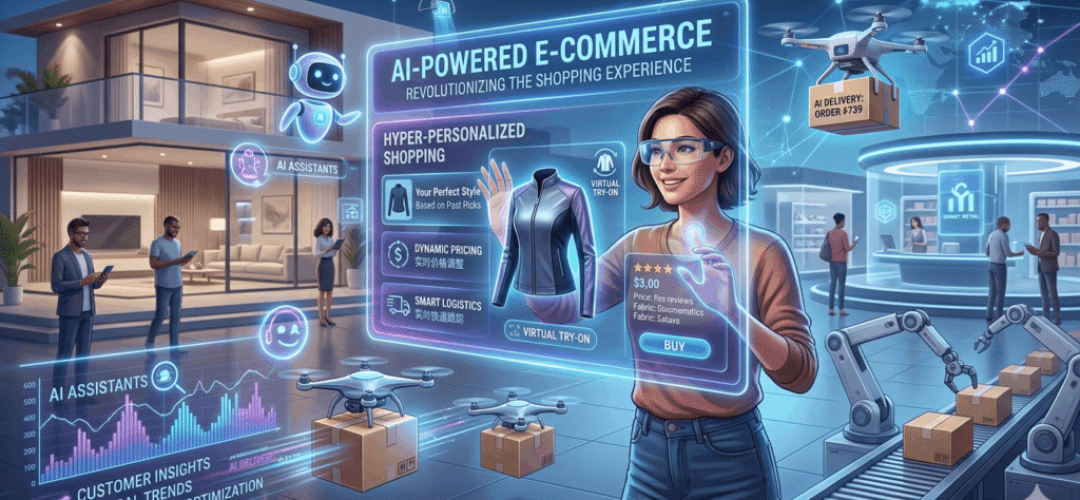
In an era where consumers value time and personalization above all else, businesses are facing unprecedented pressure to deliver flawless interactions. The traditional, reactive approach to customer service—where customers wait on hold for thirty minutes to speak with an agent who may or may not have the answer—is no longer viable.
Enter Artificial Intelligence (AI). Across the globe, AI is fundamentally reshaping the Customer Experience (CX) landscape. By transforming standard business-consumer interactions into predictive, highly personalized, and seamless journeys, AI is helping companies boost satisfaction scores, foster brand loyalty, and drive sustainable revenue growth.
Here is a detailed exploration of how AI is revolutionizing CX worldwide, the technologies driving this shift, and what the future holds.
1. Hyper-Personalization: Moving Beyond “Hello, [First Name]”
For years, personalization in digital marketing meant adding a customer’s name to an email subject line or suggesting a product based on a single past purchase. AI has elevated this concept to hyper-personalization.
By analyzing massive datasets—including browsing history, real-time clickstream data, social media sentiment, past purchase behavior, and even geographic location—AI algorithms can build dynamic, 360-degree customer profiles.
Predictive Recommendations
E-commerce giants like Amazon and streaming services like Netflix have mastered this. Their AI engines don’t just look at what you bought; they look at how you browsed, what you skipped, and what users with similar patterns did next. This allows brands to predict what a customer wants before the customer even realizes it themselves.
Dynamic Content Creation
AI enables websites and mobile apps to change their interface, promotions, and messaging in real time based on who is viewing them. A returning customer might see a dashboard focused on loyalty rewards and complementary products, while a first-time visitor is greeted with a tailored introductory offer.
2. 24/7 Availability and Instant Gratification via Intelligent Automation
In a globalized economy, customers expect support at 2 a.m. just as much as at 2 p.m. Hiring round-the-clock, multilingual human support teams is financially prohibitive for most businesses. AI bridges this gap seamlessly.
Traditional Support: Ticket Submitted ➔ Queued ➔ Assigned ➔ Resolved (Hours/Days)
AI-Powered Support: Query Entered ➔ Instant NLP Analysis ➔ Instant Resolution (Seconds)
Advanced Conversational AI
The early days of rigid, rule-based chatbots that frustrated users with “I didn’t understand your question” are fading. Modern Conversational AI, powered by Large Language Models (LLMs) and Natural Language Processing (NLP), can understand context, slang, intent, and emotion. They converse like humans and can resolve complex queries—such as processing returns, changing flight bookings, or troubleshooting technical issues—instantly.
Seamless Human Handoffs
AI doesn’t necessarily replace humans; it augments them. When a query is too sensitive or complex for a bot, the AI smoothly transitions the conversation to a human agent. Crucially, it provides the agent with a complete transcript and summary of the interaction so the customer never has to repeat themselves.
3. Anticipating Needs with Predictive Analytics
The holy grail of customer experience is resolving an issue before the customer even knows it exists. Predictive AI makes this proactive approach a reality.
- Preventative Maintenance: In telecom and utility sectors, AI monitors infrastructure performance. If a router or server shows signs of imminent failure, the system can automatically alert the customer or dispatch a technician, preventing downtime entirely.
- Churn Reduction: AI models can detect subtle changes in user behavior that indicate dissatisfaction—such as a drop in app usage frequency or frequent visits to the “cancel subscription” page. Once flagged, the system can automatically trigger a targeted retention campaign, such as offering a discount or a personalized check-in from an account manager.
4. Sentiment Analysis: Reading Between the Digital Lines
Understanding what a customer says is easy; understanding how they feel is where AI truly shines. Natural Language Understanding (NLU) allows businesses to perform real-time sentiment analysis across thousands of touchpoints simultaneously.
When a customer posts a review, sends an email, or tweets about a brand, AI scans the text for emotional cues, categorizing the sentiment as positive, neutral, or negative.
Why this matters: If a high-value customer leaves a highly frustrated review on social media, the AI can immediately flag it as “high priority” and escalate it to a specialized customer retention team. This rapid crisis management can turn a potentially brand-damaging moment into an opportunity to showcase exceptional care.
5. Empowering Human Agents (The “Copilot” Effect)
While much of the focus on AI centers on customer-facing bots, some of the most significant CX improvements happen behind the scenes by empowering human employees. AI acts as an intelligent assistant, or “copilot,” for support agents.
Real-Time Knowledge Retrieval
During a live call, an AI system can listen to the conversation, identify the customer’s problem, and automatically pull up the exact technical documents, billing history, or policy guidelines the agent needs to resolve the issue. This drastically reduces Average Handle Time (AHT) and eliminates awkward silences.
Automated Summarization and Notes
After a call ends, agents traditionally spend several minutes typing up notes and categorizing the ticket. AI can summarize a 15-minute conversation into three concise bullet points and update the CRM system in milliseconds, allowing the agent to immediately move on to helping the next customer.
6. Globalization and Accessibility Through Real-Time Translation
Language barriers have long been a hurdle for global businesses. AI-driven translation tools are democratizing access to high-quality customer experience worldwide.
With real-time machine translation, a customer support agent based in Brazil who only speaks Portuguese can text or chat seamlessly with a customer in Japan who only speaks Japanese. The AI translates both sides of the conversation instantly and accurately, preserving technical terms and brand tone. This allows companies to scale globally without needing to establish physical, multilingual call centers in every target market.
Balancing Automation with the Human Touch
As businesses rush to adopt AI to improve CX, maintaining a balance remains critical. Over-automation can lead to a sterile, frustrating customer journey if users feel locked behind a wall of algorithms. The most successful global brands view AI not as a tool to eliminate human interaction, but as a mechanism to eliminate friction.
By automating repetitive, mundane tasks, AI frees up human creativity and empathy for the moments that truly require a personal touch.
Conclusion
Artificial Intelligence is no longer a futuristic luxury; it is the backbone of modern customer experience strategy. From hyper-personalized product feeds and proactive problem-solving to real-time sentiment tracking and instant global translation, AI is making interactions faster, smarter, and more empathetic.
As these technologies continue to evolve, the businesses that successfully integrate AI to complement and elevate human capability will be the ones that win customer loyalty and dominate the global marketplace.