
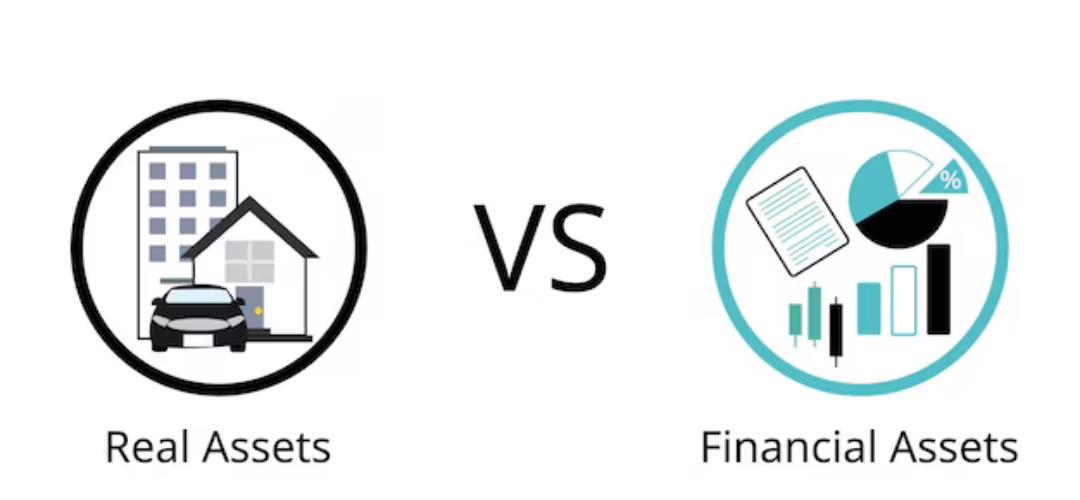
Understanding the fundamental distinction between Real Assets and Financial Assets is a cornerstone of modern portfolio theory. While both serve as vehicles for wealth creation, they operate on different economic principles, offer unique risk-reward profiles, and react differently to market cycles.
For investors aiming to build a resilient portfolio, choosing between the tangible and the contractual is not just a matter of preference—it is a strategic decision that impacts liquidity, inflation protection, and long-term growth.
1. Defining the Basics
What are Real Assets?
Real assets are physical or tangible assets that have intrinsic value due to their substance and properties. They represent the “bricks and mortar” of the global economy. Because they exist in the physical world, they are often subject to wear and tear, but they also provide utility.
Examples include:
- Real Estate: Residential, commercial, and industrial properties.
- Commodities: Gold, silver, oil, and agricultural products.
- Infrastructure: Bridges, toll roads, and energy grids.
- Natural Resources: Timberland and mineral rights.
What are Financial Assets?
Financial assets are intangible liquid assets that derive their value from a contractual claim on an underlying entity. They do not have inherent physical value; instead, they represent a right to future cash flows or ownership in a company or government.
Examples include:
- Equities (Stocks): Ownership shares in a corporation.
- Fixed Income (Bonds): Debt instruments where the investor lends money to an entity.
- Cash and Equivalents: Bank deposits and money market instruments.
- Derivatives: Options and futures contracts.
2. Key Differences: Real vs. Financial
To effectively allocate capital, one must compare these two asset classes across several critical dimensions:
Tangibility and Intrinsic Value
The most obvious difference is physicality. A real asset, like a plot of land, retains value because it can be used for farming or development. A financial asset, such as a stock certificate, is essentially a piece of paper (or a digital entry) that could theoretically become worthless if the issuing company goes bankrupt.
Liquidity
Financial assets generally offer high liquidity. Stocks and bonds can be sold on public exchanges (like the NYSE or NASDAQ) within seconds. Real assets, however, are notoriously illiquid. Selling a commercial building or a rare piece of art can take months of negotiation, appraisals, and legal documentation.
Valuation Methods
Valuing these assets requires different analytical toolsets:
- Financial Assets are often valued using the Discounted Cash Flow (DCF) model, where the value is the present value of expected future dividends or interest payments.
- Real Assets are often valued based on replacement cost, comparable sales, or the utility/income the physical asset generates (e.g., rental income from an apartment).
3. The Role of Inflation
One of the most compelling reasons to hold Real Assets is their performance during inflationary periods.
When inflation rises, the purchasing power of currency falls. Financial assets, particularly fixed-income bonds, often suffer because their future payments are worth less in today’s terms. In contrast, real assets tend to have a positive correlation with inflation.
- Commodities: As the price of goods rises, the price of the raw materials (oil, wheat) typically rises as well.
- Real Estate: Landlords can often increase rents to match inflation, and the replacement cost of buildings increases as labor and material costs climb.
[Image comparing inflation impact on a bond vs. a physical gold coin]
4. Risk Profiles and Diversification
The Risks of Financial Assets
Financial assets are highly sensitive to market sentiment and interest rate changes. When the Federal Reserve raises rates, bond prices typically fall, and stock valuations may be compressed. They are also subject to “counterparty risk”—the risk that the entity on the other side of the contract fails to fulfill its obligation.
The Risks of Real Assets
Real assets face operational and carrying costs. If you own a building, you must pay for maintenance, insurance, and property taxes. If you own physical gold, you may need to pay for secure storage. Additionally, real assets are susceptible to localized risks (e.g., a natural disaster affecting a specific property).
Diversification Benefits
Because real and financial assets often do not move in perfect synchronization, combining them creates a diversified portfolio. When the stock market crashes (financial asset volatility), gold or timberland (real assets) may remain stable or even appreciate, acting as a “safe haven.”
5. Accessibility for the Modern Investor
Historically, real assets were reserved for the wealthy due to high entry costs. However, financial innovation has blurred the lines:
- REITs (Real Estate Investment Trusts): These allow investors to buy shares in a company that owns real estate. This turns a real asset into a financial asset, providing liquidity while maintaining exposure to property markets.
- ETFs (Exchange-Traded Funds): Investors can now buy “paper gold” or commodity bundles through their brokerage accounts.
- Fractional Ownership: Blockchain and fintech platforms now allow for the purchase of fractions of artwork or commercial buildings.
Summary Table: At a Glance
| Feature | Real Assets | Financial Assets |
|---|---|---|
| Form | Tangible/Physical | Intangible/Contractual |
| Liquidity | Low (Slow to sell) | High (Fast to sell) |
| Inflation Hedge | High | Low to Moderate |
| Maintenance | Requires upkeep/storage | No physical maintenance |
| Examples | Land, Gold, Oil | Stocks, Bonds, Cash |
6. Conclusion: Which is Better?
The “Real vs. Financial” debate isn’t about finding a winner; it’s about finding balance.
Financial assets are the engines of wealth accumulation and liquidity. They allow you to participate in the growth of global corporations with ease. Real assets are the anchors of wealth preservation. They provide a hedge against currency devaluation and offer tangible security when financial markets become volatile.
For most investors, a ratio that favors liquid financial assets for growth, supplemented by real assets for stability and inflation protection, represents the most sustainable path toward long-term financial health. By understanding the unique DNA of each asset class, you can build a portfolio that is prepared for any economic weather.