The intersection of technology and art has always been a catalyst for cultural evolution. From the invention of the camera to the advent of digital editing software, every technological leap has expanded the boundaries of human expression. However, we are currently witnessing a paradigm shift that fundamentally redefines the act of creation itself: the rise of Generative Artificial Intelligence (GenAI) and advanced creative technology.
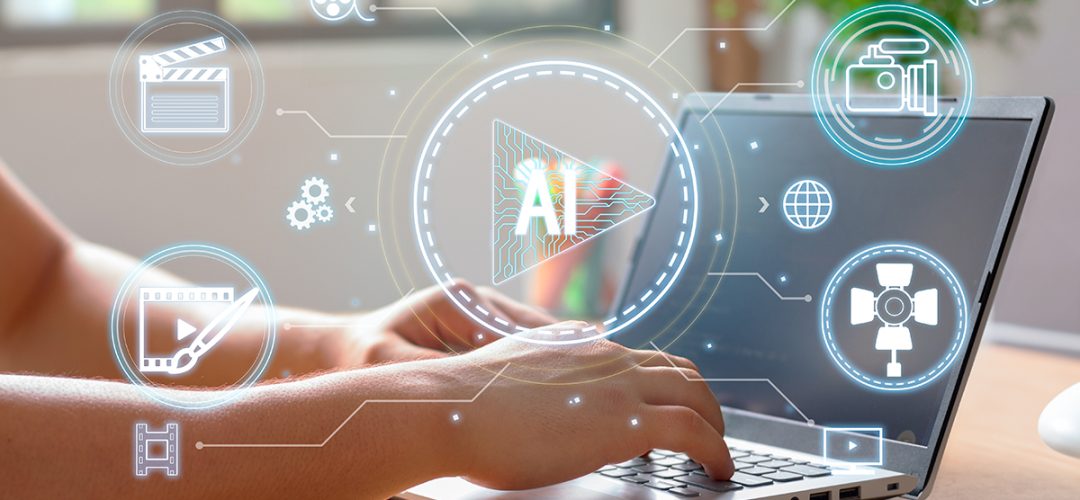
No longer restricted to executing predictable commands, machines can now synthesize, iterate, and generate original creative assets. From hyper-realistic imagery and cinematic videos to complex musical compositions and literature, generative AI is shifting from a mere productivity tool to a core collaborative partner. This transformation is reshaping the structural landscape of the creative industries, presenting unprecedented opportunities alongside complex ethical and economic questions.
The Technological Engine Behind the Creative Boom
The explosive growth of creative technology is rooted in massive breakthroughs in deep learning and machine learning architectures. Key innovations have built the foundation for today’s creative ecosystem:
- Large Language Models (LLMs): Systems that process, understand, and generate human-like text, serving as the foundational engine for creative writing, screenplaying, and rapid ideation.
- Diffusion Models: Algorithms that convert textual descriptions into rich visual imagery by iteratively refining random noise into highly detailed graphics, paintings, or photographs.
- Unified Multi-Task Frameworks: Modern AI architectures that bridge different mediums, allowing a single model to handle text-to-image, text-to-video, and real-time 3D reconstruction seamlessly.
Rather than relying on isolated tools for specific tasks, modern creators utilize interconnected AI pipelines. A concept can start as a text prompt, evolve into a fully rendered 3D model, and finish as an orchestrated audio track—all within a unified digital ecosystem.
Reshaping the Creative Workflow: From Augmentation to Collaboration
For decades, software served a supporting role, automating repetitive workflows like color correction or audio leveling. Today, generative AI operates on a much higher plane, facilitating rapid prototyping and ideation.
In traditional advertising, design, and filmmaking, the conceptual phase often requires days or weeks of manual drafting. With generative platforms, creative professionals can generate dozens of distinct visual styles, storyboards, or mock-ups in a matter of minutes. This drastically lowers the barrier to experimentation. Instead of spending time on the mechanics of execution, creators can focus their energy on high-level artistic direction, curation, and conceptual depth.
The Rise of New Creative Personas
As the technology integrates deeper into the industry, the skillsets demanded of human professionals are shifting. We are seeing the emergence of new, hybrid roles:
Prompt Engineers and AI Curators: Professionals specialized in structuring complex algorithmic inputs and filtering vast amounts of AI-generated content to find the perfect artistic output.
Hybrid Technical Artists: Creatives who seamlessly blend traditional illustration, coding, and algorithmic steering to build entirely new visual aesthetics.
Sector-by-Sector Impact of Creative Tech
The ripple effects of generative AI are felt across every corner of the creative economy. The table below outlines how different creative domains are adapting to this technological wave.
| Creative Sector | Traditional Workflow Barrier | AI-Driven Transformation |
|---|---|---|
| Visual Arts & Design | Hours spent on tedious asset rendering and manual asset variations. | Instant text-to-image creation, infinite variations, and automated design scaling. |
| Filmmaking & Video | Massive budgets required for physical sets, complex VFX, and rendering times. | Text-to-video generation, real-time virtual backdrops, and AI-assisted color grading. |
| Music & Audio | Expensive studio time, complex sound engineering, and manual track mixing. | Algorithmic composition, adaptive audio scaling for video games, and synthesized instrumentation. |
| Gaming & Metaverses | Years of manual coding to build expansive 3D assets and non-player character (NPC) dialogues. | Procedural generation of infinite 3D worlds and dynamic, AI-driven conversational NPCs. |
Navigating the Ethical and Legal Frontier
The speed of AI adoption has inevitably outpaced the development of legal and regulatory frameworks. This gap has created intense debate around intellectual property (IP), authorship, and the ethics of data sourcing.
Copyright and Fair Compensation
At the heart of the current debate is text and data mining. Generative models require massive datasets of existing human art, text, and music to learn patterns. Thousands of artists worldwide have raised valid concerns regarding how their intellectual property is utilized without explicit consent or fair compensation. Governments across Europe, North America, and Asia are actively exploring policy interventions to balance the economic benefits of AI development with the protection of traditional creative labor.
The Challenge of Originality and Uniformity
While AI enhances individual productivity, researchers have noted a potential paradox: an over-reliance on shared algorithmic models could inadvertently lead to a homogenization of style. Because generative systems predict outputs based on historical data, human oversight, unique lived experiences, and deliberate subversion of rules remain essential to push art into truly novel territories.
The Economic Reality: Augmentation or Replacement?
There is an undeniable underlying anxiety regarding workforce displacement. As autonomous agents become capable of executing complex multi-step workflows, certain production-heavy roles face structural changes.
However, historical context suggests that technological disruption ultimately leads to a net expansion of the creative ecosystem. By reducing production costs, generative AI allows independent creators and small studios to execute massive projects that previously required Hollywood-sized budgets. The democratization of these tools means that a compelling story or a brilliant concept matters far more than access to expensive capital infrastructure.
Conclusion: The Future is Hybrid
The rise of generative AI does not spell the end of human creativity; rather, it marks the beginning of its most expansive chapter. The ultimate trajectory of creative technology is a hybrid socio-technical ecosystem where human intuition, emotional depth, and conceptual intent guide the speed, scale, and versatility of artificial intelligence.
As we move forward, the most successful creators will not be those who reject the technology, nor those who rely on it blindly to do all the work. The future belongs to those who learn to converse with the machine—using it to amplify their unique human voice, break through creative blocks, and bring previously impossible visions to life.
What are your thoughts on the integration of generative AI in your creative workflow? Which tools have had the biggest impact on your industry so far?