The dawn of the Fourth Industrial Revolution has been defined by one underlying catalyst: Artificial Intelligence (AI). What once existed solely within the realms of science fiction has rapidly matured into the backbone of modern enterprise infrastructure. Today, AI is no longer a speculative technology or a luxury reserved for tech giants; it is a fundamental utility driving efficiency, innovation, and competitive advantage across every major economic sector.
From automating mundane tasks to predicting complex global market shifts, AI’s versatility is reshaping how businesses operate. This article explores how artificial intelligence is being applied across key industries, examining its profound impact, current use cases, and the future trajectory of global commerce.
1. Healthcare: Revolutionizing Diagnostics and Patient Care
Perhaps no industry benefits more profoundly from AI than healthcare, where technological advancements directly translate into saved lives. Traditional medical processes—ranging from drug discovery to symptom diagnosis—have long been hindered by the time required to analyze massive datasets. AI is fundamentally changing this paradigm.
Advanced Medical Imaging and Diagnostics
AI-powered algorithms, particularly those utilizing deep learning and computer vision, can scan medical images (such as X-rays, MRIs, and CT scans) with astonishing accuracy. In many cases, these systems can detect anomalies, such as early-stage malignant tumors or micro-fractures, faster and more accurately than the human eye.
Accelerated Drug Discovery
Developing a new pharmaceutical drug historically takes over a decade and costs billions of dollars. AI accelerates this timeline by simulating molecular combinations and predicting how specific compounds will interact with target diseases. What used to take years of trial-and-error in a physical laboratory can now be modeled virtually in a matter of weeks, fast-tracking life-saving treatments to market.
2. Finance: Enhancing Security and Automating Wealth Management
The financial sector thrives on data, making it a natural environment for artificial intelligence applications. Financial institutions use AI to mitigate risk, optimize portfolios, and safeguard consumer assets.
Fraud Detection and Prevention
Legacy fraud detection systems relied on rigid, rule-based parameters that often triggered false positives. Modern AI models utilize machine learning to analyze transaction patterns in real-time. By establishing a baseline of a user’s typical behavior (geolocation, spending habits, transaction frequency), the AI can instantly flag and freeze anomalous transactions, preventing cybercrime before it escalates.
Algorithmic Trading and Robo-Advisors
In wealth management, AI-driven “robo-advisors” democratize financial planning by providing automated, algorithm-based portfolio management tailored to an individual’s risk tolerance. On a macro scale, institutional investors leverage predictive AI to execute high-frequency algorithmic trading, analyzing thousands of market variables simultaneously to make split-second investment decisions.
3. Retail and E-Commerce: Hyper-Personalization and Supply Chain Resilience
Retailers have shifted from a reactive business model to a predictive one, largely thanks to AI’s capacity to understand and anticipate consumer behavior.
Hyper-Personalized Customer Experiences
When platforms like Amazon or Netflix suggest your next purchase or watch, they are utilizing sophisticated recommendation engines. AI tracks browsing history, purchase patterns, search queries, and even the time of day to curate a highly personalized digital storefront for every individual user, drastically increasing conversion rates.
Intelligent Inventory and Supply Chain Management
Overstocking and understocking both represent massive financial losses for retailers. AI mitigates this by analyzing historical sales data, seasonal trends, weather forecasts, and social media hype to predict inventory demand with high precision. Furthermore, AI optimizes logistics by determining the most efficient shipping routes, reducing carbon footprints and delivery times.
4. Manufacturing: The Rise of Smart Factories and Predictive Maintenance
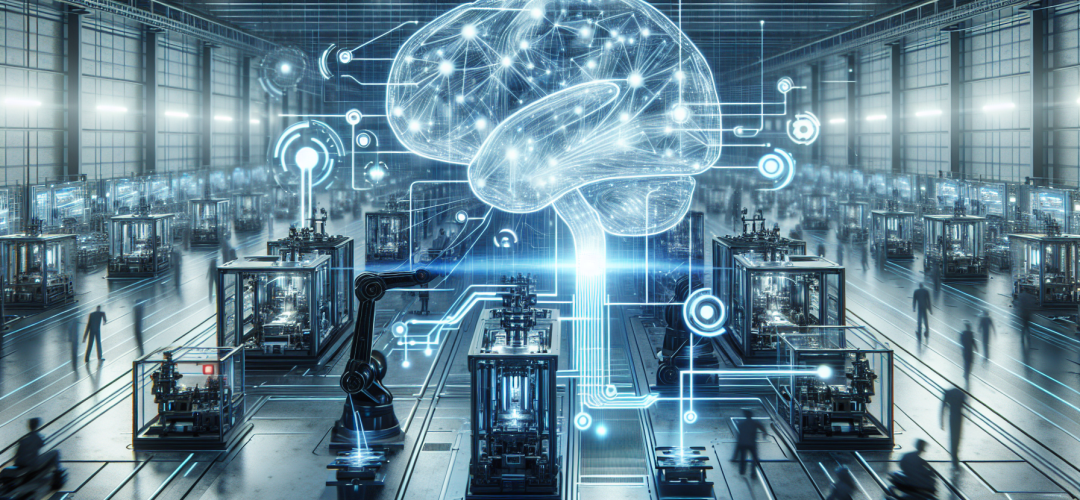
In industrial settings, AI is the driving force behind “Industry 4.0.” By integrating AI with the Internet of Things (IoT), manufacturers are creating hyper-efficient, self-correcting production ecosystems.
Predictive Maintenance
Equipment failure can halt production lines, costing companies millions of dollars in downtime. AI algorithms monitor continuous data streams from sensors embedded in factory machinery. By detecting subtle vibrations, temperature fluctuations, or deviations from normal operation, the AI can predict precisely when a machine component is likely to fail, allowing engineers to schedule maintenance before a breakdown occurs.
Collaborative Robots (Cobots)
Unlike traditional industrial robots that operate in isolation behind safety cages, AI-powered “cobots” work alongside human operators. These machines use computer vision and spatial awareness to adapt to human movements, handling repetitive, heavy, or dangerous tasks while ensuring a safe workplace environment.
5. Transportation and Logistics: Autonomous Systems and Route Optimization
The transportation sector is undergoing a massive shift as autonomous technologies mature and global supply chains demand greater efficiency.
Autonomous Vehicles
While fully self-driving passenger cars continue to navigate regulatory and technical frameworks, autonomous AI is already making massive strides in closed environments. Autonomous haul trucks in mining sectors, self-driving forklifts in warehouses, and automated drones for last-mile delivery are actively transforming how goods are moved.
Dynamic Fleet Management
For logistics providers, AI optimizes fleet routing by calculating real-time variables such as traffic congestion, construction delays, fuel consumption, and weather hazards. This dynamic rerouting saves millions of gallons of fuel annually and ensures supply chain reliability.
6. Education: Personalized Learning Pathways
Education is shifting away from a “one-size-fits-all” framework toward a student-centric paradigm, powered by adaptive artificial intelligence.
Adaptive Learning Platforms
Every student absorbs information at a different pace. AI-driven educational software assesses a student’s strengths and weaknesses in real-time, automatically adjusting the difficulty and delivery style of the curriculum. If a student struggles with a specific mathematical concept, the AI can provide targeted exercises and alternative explanations until mastery is achieved.
Administrative Automation
Educators spend a significant portion of their time on administrative duties, such as grading standardized assignments and managing paperwork. AI tools automate these tasks, freeing up teachers to focus on mentorship, emotional intelligence, and direct student interaction.
Conclusion: The Responsible Path Forward
Artificial Intelligence is no longer an emerging trend; it is the infrastructure upon which the future global economy is being built. By enhancing human capability, reducing operational waste, and unlocking insights hidden within oceans of data, AI is driving unprecedented value across healthcare, finance, retail, manufacturing, logistics, and education.
However, as businesses integrate AI into their core operations, ethical considerations regarding data privacy, algorithmic bias, and workforce displacement must remain at the forefront. The industries that succeed most spectacularly will not be those that replace humans with AI, but those that master the art of human-AI collaboration—leveraging technology to amplify human ingenuity and build a smarter, more efficient world.